
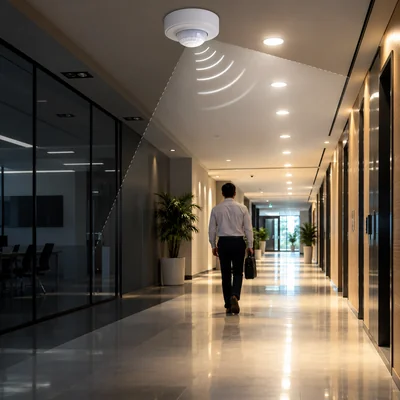
Motion Detected Lighting
Automated Sensor-Triggered Illumination for Commercial & Industrial Areas
Motion-Detected Lighting Solutions for Offices & Commercial Spaces Liverton Automation provides motion-detected lighting solutions for offices, commercial buildings and large warehouse areas. Using Sensinova sensors and wired KNX motion sensors from various brands, our systems automatically control lighting based on occupancy and movement. This helps improve convenience, reduce unnecessary lighting operation and support energy-efficient building management.
Key Architectural Features
Automatic Lighting Control Based on
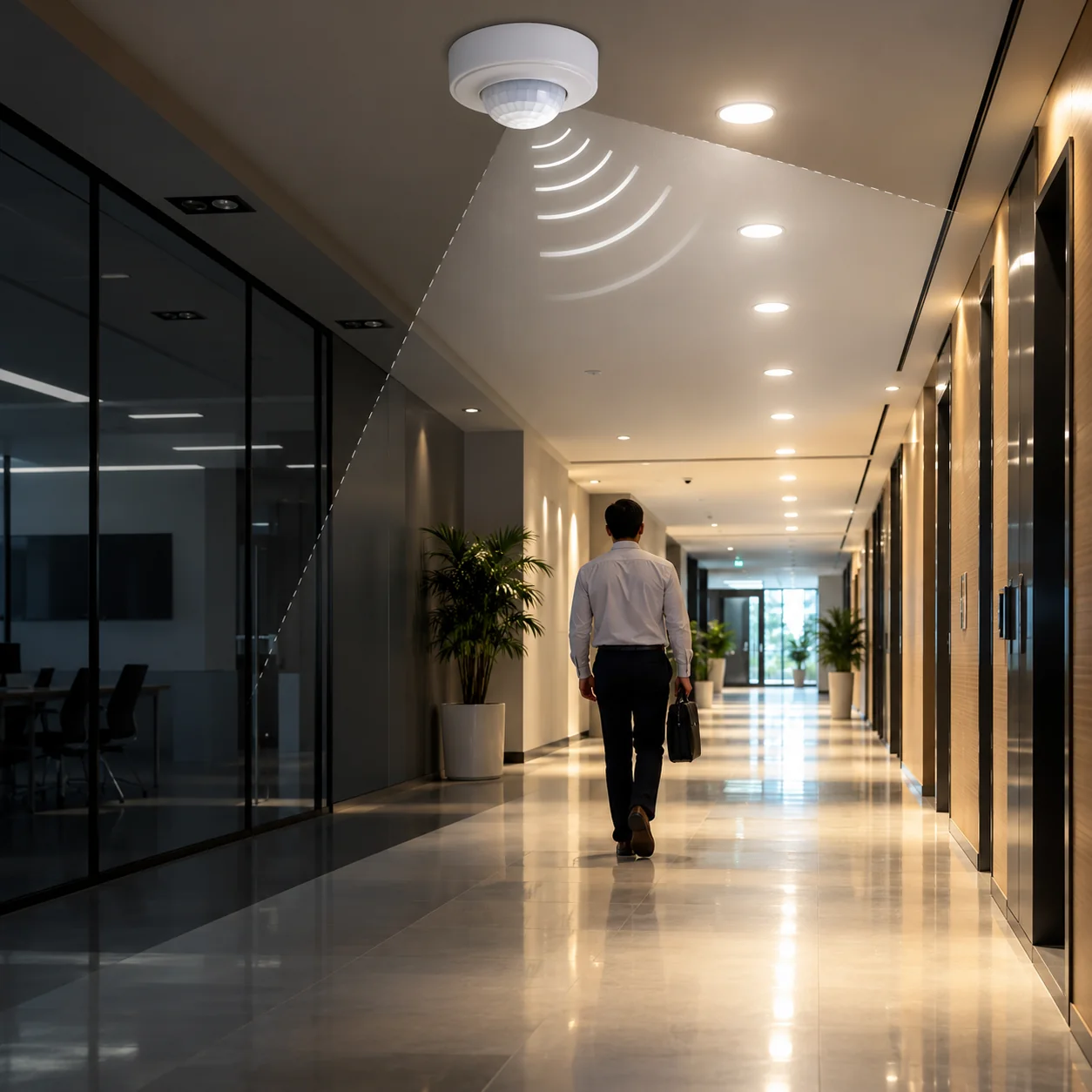
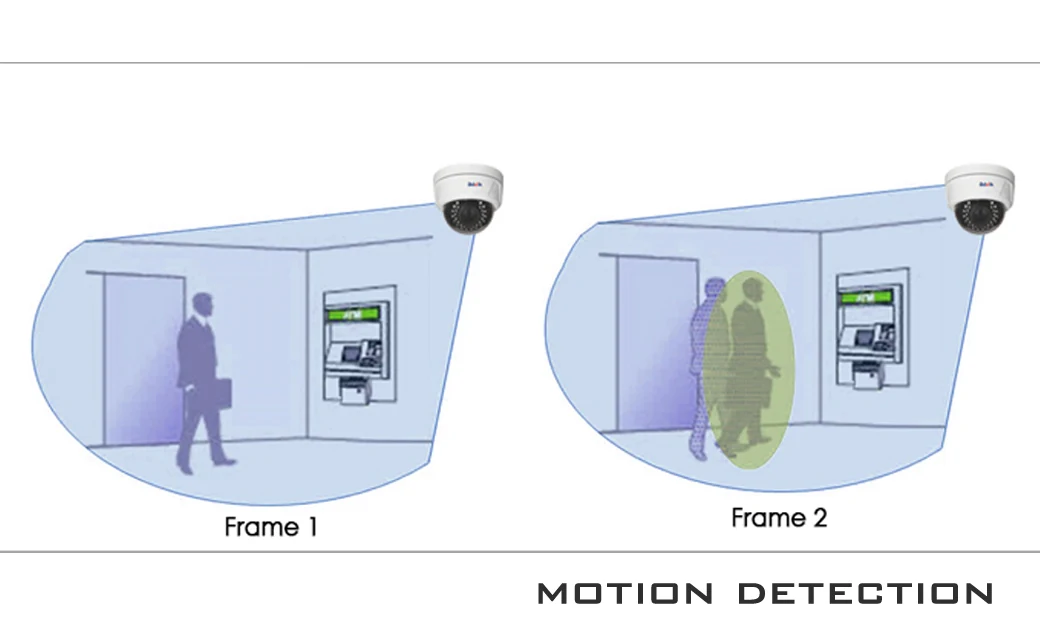
Automatic Lighting Control Based on MovementMotion sensors detect movement within a designated area and automatically switch lights on when required. This is particularly useful in offices, corridors, restrooms, storage rooms and other spaces where lighting is not needed continuously.
Energy-Efficient Lighting Operation
Lights can automatically switch off after an area remains unoccupied for a configured period. This helps avoid unnecessary electricity consumption and supports energy savings in commercial buildings and warehouses.
Wired KNX Sensor Integration
Wired KNX motion sensors can be integrated with a KNX building automation system to control lighting according to occupancy, configured time delays and other programmed conditions. They can also work alongside other KNX functions, depending on the system design.
Intelligent Lighting for Large Ware
Intelligent Lighting for Large Warehouse AreasMotion-detected lighting can be planned for warehouse aisles, loading areas, storage zones and other large spaces. Sensor placement and control zones can be configured to activate lighting in occupied areas while reducing unnecessary operation in unoccupied sections.
Customised Sensor Selection & Coverage
Liverton Automation offers Sensinova sensors and wired KNX sensors from different brands. Sensor selection and placement depend on room dimensions, mounting height, detection range, movement patterns and the type of lighting being controlled.
Improved Convenience & Operational
Improved Convenience & Operational EfficiencyAutomated lighting reduces the need for employees to manually operate switches in frequently used or intermittently occupied areas. It supports convenient movement through offices, commercial facilities and warehouse spaces while helping maintain appropriate lighting levels.
Client Benefits
- Reduced energy wastage: Helps prevent lights from remaining on unnecessarily in unoccupied areas.
- Convenient operation: Lighting responds automatically to detected movement.
- Better warehouse lighting management: Supports occupancy-based lighting control across selected aisles and zones.
- Flexible automation: Suitable for standalone sensor-based control or integration with wired KNX systems.
- Customised coverage: Sensor locations and detection zones can be planned according to the building layout.
- Improved building efficiency: Helps organisations manage lighting operation more effectively.
Frequently Asked Questions
Everything you need to know about system selection, retrofitting, and Kerala installation
Q. What is motion-detected lighting?
A. Motion-detected lighting is an automated lighting system that uses sensors to detect movement and control lights accordingly. Lights can switch on when movement is detected and switch off after a configured period without further movement.
Q. Which motion sensor brands does Liverton Automation provide?
A. Liverton Automation provides Sensinova sensors and wired KNX motion sensors from different brands. The suitable sensor depends on the application, detection coverage and automation requirements.
Q. Can motion sensors be used in large warehouses?
A. Yes. Motion sensors can be installed in warehouse aisles, storage zones and loading areas. Large spaces may require multiple sensors and carefully planned lighting zones to provide suitable coverage.
Q. Can motion-detected lighting be integrated with KNX automation?
A. Yes. Wired KNX motion sensors can communicate with the KNX system to control compatible lighting circuits and support programmed automation functions. The exact features depend on the selected sensor and system configuration.
Q. Will the lights switch off if there is no movement?
A. Yes. A suitable sensor can be configured with a time delay so that lights switch off after no movement is detected for a specified period. The delay should be selected according to the area's use and safety requirements.
Q. Can motion sensors detect movement in offices and warehouses differently?
A. Yes. Sensor type, sensitivity, detection pattern and placement can be selected according to the application. Small offices may require room-level coverage, while warehouses often need sensors designed for larger areas and higher mounting positions.
Q. Can motion sensors work with existing lights?
A. In many cases, sensors can be added to existing lighting circuits, provided the sensor is compatible with the electrical load and control arrangement. Site inspection is recommended to confirm wiring, circuit capacity and the required control method.
Q. Do motion sensors work in complete darkness?
A. Many motion sensors can detect movement independently of visible light, while some models include a light-level sensor that can restrict lighting activation to darker conditions. The behaviour depends on the selected sensor and its settings.